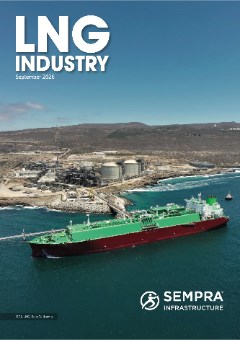
Editorial comment
We’ve reached September, which can only mean one thing for the oil and gas industry: it’s time for the return of Gastech.
Register for free »
Get started now for absolutely FREE, no credit card required.
Following a record-breaking turnout at Gastech 2025, with 50 000 participants from over 150 countries,1 this year’s show is sure to be another example of industry leaders, policymakers, and innovators coming together to discuss the changes there have been in the LNG industry (and to a larger extent, the energy industry overall) over the past year, where the industry currently stands, and what it may look like a year from now.
This year, the show returns to Asia, taking place in Bangkok, Thailand. It has been 18 years since the event was last held here, and it’s fair to say that the LNG industry there looks very different now than it did back then. In that time, Thailand became Southeast Asia’s first LNG importer in 2011,2 and added a second regasification terminal in 2022 – the Nong Fab LNG import terminal, owned by Thailand’s national oil company, PTT3 – to handle rising natural gas demand amidst declining domestic gas production and boost energy security. It provides an encouraging backdrop for the show; Thailand is one of Asia’s fastest-growing energy regions, with demand projected to rise 45% by 2050.1 In addition, gas-based power remains prevalent, with an increasing reliance on imported LNG. Over the last nine months alone, Thai companies including PTT and Thai Gulf Development Co. have signed long-term LNG supply agreements with Eni,4 Centrica Energy,5 ENGIE,6 and Cheniere,7 to name a few. Since the start of disruptions in the Middle East, with Thailand historically importing much of its LNG from Qatar (along with Malaysia, Indonesia, Brunei, and Australia), it is not surprising the country is increasingly looking to the US for LNG volumes.
Of course, Asia as a whole is a key market for the LNG industry. Despite some declines in Asian LNG demand over the past couple of years, Wood Mackenzie forecasts Asia Pacific LNG demand recovering to 279 million t in 2027, reaching 297 million t by 2028, due to geopolitical risks subsiding, new regasification infrastructure coming online, and the resumption of structural demand growth across Southeast and South Asia.8 Our regional report for this issue from the Asia Natural Gas & Energy Association looks at this in more detail, reflecting on a reinforced focus on energy security, the critical role of LNG in Asia Pacific energy systems, and steps that can be taken to rebuild confidence and ensure gas remains affordable and available for all nations following a year of unprecedented change and uncertainty in the region.
Another key topic of the show, and of the September issue of LNG Industry, is low-carbon solutions. This can be realised in a multitude of ways, from across the LNG value chain, with many sectors of the industry finding ways to reduce emissions (including mitigating methane emissions), or considering alternative fuelling options. This issue considers all of these examples, with articles on reducing water use without compromising pump reliability, LNG bunkering and complying with regulatory frameworks such as FuelEU Maritime, the role solar has to play in shipping’s energy transition, using artificial intelligence to improve operational efficiency at bio-LNG filling stations, the opportunities offered by rapid advances in methane measurement and abatement technologies, and much more.
LNG Industry will be exhibiting at Gastech in Bangkok from 14 – 17 September 2026, with members of the team in attendance. Feel free to pick up a copy of our bumper September issue or have a chat with us at Booth MV10.
References
- ‘Download the Gastech Event Brochure’, Gastech, www.gastechevent.com/forms/download-event-brochure
- ‘Thailand’, Asia Natural Gas & Energy Association, https://angeassociation.com/location/thailand
- ‘Nong Fab LNG import terminal’, Artelia Group, www.arteliagroup.com/project/nong-fab-lng-import-terminal/
- ‘Eni signs a long-term LNG sale agreement with Thai Gulf Development Company, further enhancing its global marketing footprint’, Eni, (4 December 2025), www.eni.com/en-IT/media/press-release/2025/12/eni-signs-long-term-lng-sale-agreement-with-tai-gulf-development-company.html
- ‘Centrica Energy and PTT Sign Long-Term LNG Sale and Purchase Agreement’, Centrica Energy, (19 December 2025), https://centricaenergy.com/media-centre/centrica-energy-and-ptt-sign-long-term-lng-sale-and-purchase-agreement
- ‘ENGIE and Gulf sign 15-year LNG agreement’, ENGIE, (13 January 2026), https://engie-sem.com/engie-and-gulf-sign-15-year-lng-agreement-to-strengthen-thailands-energy-security
- ‘PTT to buy more LNG from Cheniere’, GIIGNL, (19 March 2026), www.giignl.org/news/ptt-to-buy-more-lng-from-cheniere
- ‘Asian LNG demand forecast to decline for a second consecutive year as Middle East conflict reshapes regional supply flows’, Wood Mackenzie, (13 July 2026), www.woodmac.com/press-releases/asian-lng-demand-decline-for-second-consecutive-year