
The Barrier Pressure System prevents atmospheric leakage at LNG loading arm swivel joints, improving seal integrity, operational availability, and environmental performance while enabling continued loading under controlled conditions.
The central challenge is clear: preventing any leakage from the dynamic side of the swivel joints into the atmosphere. In conventional double-seal arrangements, the primary and secondary seals are designed to prevent product release. However, seals are wear parts, and real operating conditions can differ from original design assumptions. Temperature cycles, mechanical movement, maintenance intervals, and operational load cases all influence long-term seal performance. Even with a robust maintenance strategy, a residual risk remains that leakage may occur.
For LNG terminals, such leakage is not only a technical issue. If product escapes at a swivel joint, loading operations may have to be interrupted or delayed. In practice, this can reduce terminal capacity, because not all loading arms may be available for operation. Depending on the configuration and operational situation, the affected loading arm may need to be taken out of service until the issue is inspected and resolved. This can affect berth time, loading schedules, and overall terminal availability.
There is also an environmental dimension. In LNG loading, leakage can mean the release of LNG or boil-off gas, mainly methane. Methane emissions are increasingly subject to regulatory, investor, and public scrutiny. For terminal operators, preventing product release at critical interfaces therefore supports both operational reliability and environmental performance. The target is no longer only to reduce leakage probability, but to prevent product from reaching the atmosphere at the sealing interface.
A controlled counter-pressure system addresses this challenge by adding an active barrier within the seal arrangement. The SVT-patented Barrier Pressure System applies a controlled nitrogen counter-pressure behind the primary seal. This pressure barrier is designed to prevent product from escaping into the atmosphere, even if internal leakage is detected. Instead of relying solely on the mechanical tightness of the seal, the system creates a defined pressure gradient that directs the barrier gas toward the product side and away from the atmosphere.
The operating principle is based on an additional nitrogen line routed along the loading arm, independent from the existing purge line. Nitrogen is supplied to the relevant seal space under controlled conditions. In typical applications, the barrier pressure is maintained above the product pressure, creating a stable counter-pressure barrier. If the primary seal shows signs of internal leakage, the product cannot move outward into the atmosphere because it meets the nitrogen pressure barrier.
This approach provides several operational benefits. First, atmospheric leakage from the product line of the loading arm can be eliminated at the protected interface. Second, the system enables extended functional verification of the double-seal arrangement, including both primary and secondary seals. Controlled pressure monitoring allows operators to assess seal condition more transparently and document system behavior. Third, loading operations can continue under controlled conditions even when internal leakage is detected, helping to maintain loading capacity and reduce the risk of unplanned shutdowns.
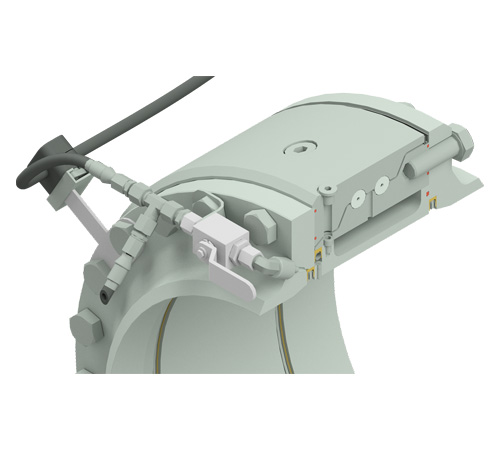
Figure 1: Swivel joint with implemented Barrier Pressure System, source SVT
Implementation is comparatively straightforward for an upgrade of this type. The main work consists of installing an additional nitrogen line along the loading arm and integrating the required pressure control and monitoring functions.
For existing LNG terminals, the system represents a targeted retrofit measure rather than a full equipment replacement. It supports the broader industry trend toward upgrading installed assets to improve safety, availability, and environmental performance. As LNG terminals face increasing requirements for integrity management, emissions control, and operational transparency, controlled counter-pressure technology provides a practical way to strengthen one of the most critical interfaces in LNG loading operations.
By physically preventing product release at swivel joint sealing interfaces, the Barrier Pressure System contributes to safer operations, reduced environmental risk, and higher asset availability. For operators, this means a clearer path toward reliable LNG transfer performance while keeping existing loading arm infrastructure in service.
For more information please visit https://www.svt-gmbh.com/en/lng-loading-arm-upgrades/.