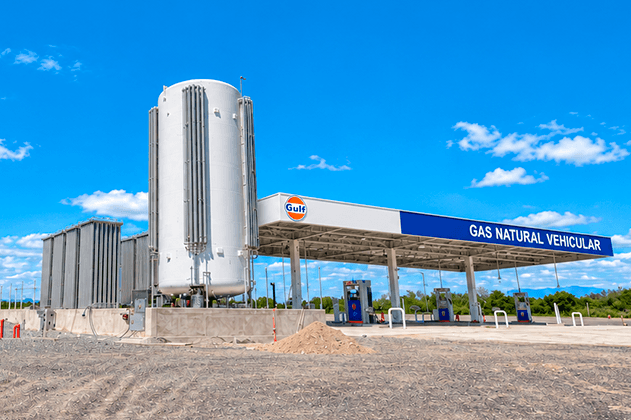
Construction of a bio-LNG plant at the Port of Gothenburg has reached an important milestone. This comes as the facility’s storage tank for bio-LNG has now been installed. The plant is being built and owned by Nordion Energi and is scheduled for completion in 2Q27. It is expected to play a key role in making Swedish biogas more accessible to more sectors, not least shipping.
Bio-LNG is a renewable fuel with low climate impact that can replace fossil alternatives in several sectors. Interest in the fuel is growing rapidly, particularly in shipping.
“Shipping’s transition requires a collaborative value chain. This facility strengthens the port’s position in renewable bunker fuels and makes it possible to offer bio-LNG to the shipping sector on a larger scale. As we see more and more vessels on order for bio-LNG operation, we also see strong potential for increased bunkering at the Port of Gothenburg,” said Therese Jällbrink, Head of Renewable Energy at the Port of Gothenburg.
Groundworks, including foundations and base slabs, have been completed, and the bio-LNG tank is the first of the plant’s key components to be installed. The tank arrived at the Port of Gothenburg by vessel and has a volume of 500 m3. It weighs close to 140 t and will be able to store up to 200 t of bio-LNG once the facility is operational.
“This is an important milestone. The facility is now really starting to take shape, and we are moving closer to our goal of being able to deliver bio-LNG from the gas grid to shipping, heavy transport and industry,” added Carolina Wistén, Head of Customer and Market, Gas Grid, at Nordion Energi.
The liquefaction plant will be the first in Sweden to be directly connected to the west Swedish gas grid. It will also create a new market for Swedish biogas producers that are, or want to become, connected to the gas grid.
The facility is expected to be completed in 2Q27 and will then be capable of delivering 250 GWh/y of bio-LNG, equivalent to the consumption of 500 trucks or the bunkering of 50 vessels.